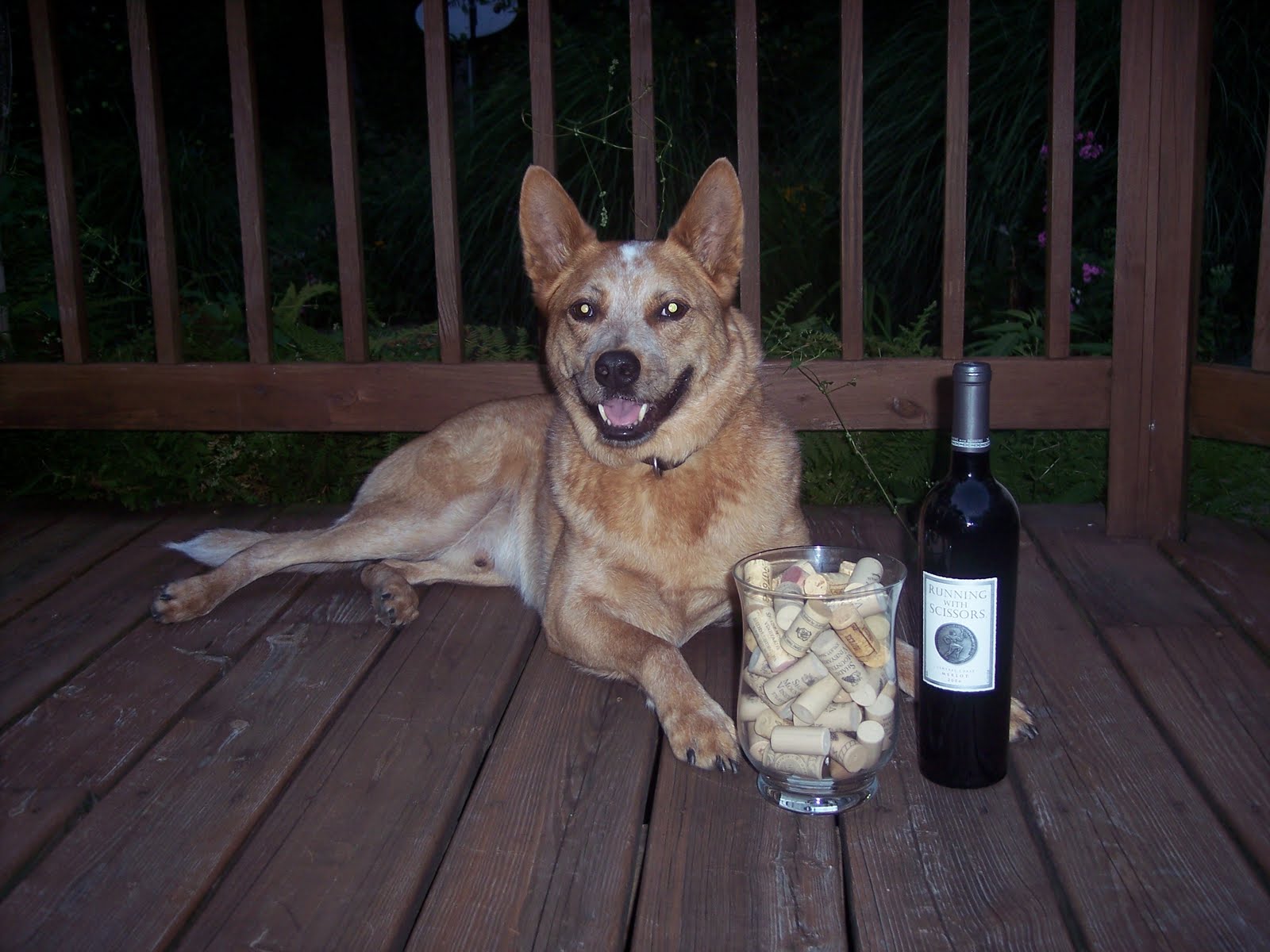
So I've found I enjoy blogging from time to time. It's nice to keep a journal of trips, activities, family events - and a way to keep up with friends and family. I've also started to enjoy some creative writing of sorts, about my experiences, opinions, and aimless rantings related to dog training and behavior.
Not that there's a huge readership of The Days of Wine and WetColdNoses, but frankly, I don't think my family, and some friends, really care about an indepth discussion of whether the gentle leader is in fact any more gentle than other tools we use to control our untrained dogs. But if you and I could probably go on for hours on that topic, you may want to tune in to my other blog, TrainingDogMa! (Click on the link. Then, feel free to consider for a moment whether the click must *always* be followed by a treat. If you don't get this joke, stick with The Days of Wine and WetColdNoses.) TrainingDogMa: a place for me to hang out with other animal behavior nerds.
Enjoy family photos of all those lovely Withuns? Stay right here!
Sunday, January 29, 2012
Wednesday, September 21, 2011
Integrity: a response to Drayton Michaels
Yesterday, I read this blog post by Drayton Michaels: http://www.dogstardaily.com/blogs/another-potentially-dangerous-dog-trainer
It contained quite a bit of critique of the Association of Pet Dog Trainers (APDT) for not taking a tough enough stance on enforcing the use of positive, science-based, humane training methods among its members. Around paragraph #432 (kidding, but it IS long) I started really thinking about Drayton's message, and what points I agreed and disagreed with. I too am disheartened when "the trainer down the road" uses heavy-handed methods like choking, alpha rolls, and shock on a dog-reactive dog, and I later see that same dog and owner as a client - and need to deal with the havoc that trainer's methods have made of the situation. And sometimes it's nice to hear someone forego the sugar-coating and just speak from their heart (and speak, and speak, and speak...lol.) Of course, Drayton's chosen tone will likely only strengthen the resolve of anyone in disagreement.
So what do I want, from fellow trainers, and from professional organizations?

It contained quite a bit of critique of the Association of Pet Dog Trainers (APDT) for not taking a tough enough stance on enforcing the use of positive, science-based, humane training methods among its members. Around paragraph #432 (kidding, but it IS long) I started really thinking about Drayton's message, and what points I agreed and disagreed with. I too am disheartened when "the trainer down the road" uses heavy-handed methods like choking, alpha rolls, and shock on a dog-reactive dog, and I later see that same dog and owner as a client - and need to deal with the havoc that trainer's methods have made of the situation. And sometimes it's nice to hear someone forego the sugar-coating and just speak from their heart (and speak, and speak, and speak...lol.) Of course, Drayton's chosen tone will likely only strengthen the resolve of anyone in disagreement.
So what do I want, from fellow trainers, and from professional organizations?
As I was composing some comments, it dawned on me that a common theme in my collection of thoughts is INTEGRITY.
Our perspectives are shaped by our experiences of course...
While not his main point, the author seems to convey that EVERY dog trainer should have skill and knowledge for EVERY situation, referencing behavior modification, taking detailed behavioral histories, and a long list of things the APDT should require before allowing a person to be a member.
From a dog trainer, what I really want is INTEGRITY. If a trainer only dispenses advice they are qualified to give, and can identify and refer other problems to qualified trainers or behavior consultants – well, I think that’s not only adequate, but more reasonable to achieve. If we as a community focused on this one thing, made this one of our core cultural values, if we regarded saying “I am not qualified for this” as a badge of honor rather than meeting it with scorn, and if we developed better and more cooperative networks of trainers in our communities – well not only would we be better off, but our clients and their dogs would be too. Dog Trainer and Behavior Consultant are two different roles; a person can be both, but if we required all dog trainers to be both, we would lose many wonderful dog trainers who have no interest in being everything a dog owner could ever need in one package. (And, just putting myself in someone else’s shoes - if it were me, I’d be more likely to refer cases and ask questions if my local expert didn’t call me a “cookie tossing hack.” Just sayin’.)
From a professional organization I want INTEGRITY. I have to say this about APDT – I don’t see them professing to be something they are not. They provide good information to pet owners about choosing a trainer, and they are very clear about what their various levels of membership mean – and do not mean. They offer information to pet owners about more stringent memberships and certifications conferred by other organizations. Their position statements are easy to find by both members and dog owners. They have a good track record of continuously improving their educational offerings and services to members. It’s not everything, but it’s something, and I think they accomplish the things they claim to do with a reasonable degree of success.
When a trainer describes their methods, first and foremost I want INTEGRITY. I don’t want to hear about the “static tickle” of a shock collar, but I also don’t want to hear about your “100% Positive” dog training, either – neither of these adequately informs the client about the trainer’s chosen methods, and neither is helping the dog owner truly understand dog training. Of course, it can be hard to describe your methods honestly, at least in a concise way, since no one agrees what positive is, but we should try to be as accurate as we can.
Which leads me to my last comment: I think the problem with having an Association of “Positive” Professional Dog Trainers is defining “positive” in a way that enough people agree with, to form a sustainable volume of membership.
The spectrum of commonly used training methods is quite a rainbow from choking and alpha rolls, to shock, to traditional leash pops, to a spray of water, to scolding, to a mat on the couch that beeps loudly and scares the dog when the dog steps on it, to tucking a dog gently into a sit and time-outs and penalty yards. Any attempt to divide the vast spectrum of methods into “positive” and “not positive” immediately splits trainers into two camps - Too Little and Too Much - and the trainers are then focused more on their differences than their similarities. I wonder sometimes if some of the positive training groups that have started, might possibly not be able to get enough traction due to just how far along the spectrum they are. Uniting less members means an organization has less power to make any impact at all. It’s hard to tell where the “perfect” balance would be, where the restrictions on methodology would still allow for a large enough supporting membership to make the organization large enough to forward the goals of the professionals in its membership.
Do I wish the ADPT could wave a magic wand, and help the dog training community evolve more quickly? Sure. Do I wish there was an alternative nationwide association or professional designation with the same size and offerings that the APDT has, that could accurately capture exactly *my* definition of “positive” and promote my own professional standards? Sure. But whenever you unite a large group, there is some element of compromise needed, and the APDT helps me to be better at what I do, which I why I am a member. To some degree, I think we’ll all have to settle for making our own culture change, with our communities, by volunteering in ways that advance our profession, and with the dog and person in front of us.
Any maybe, just maybe, an APDT webinar on how to use science-based and kind methods to deal with dog-dog reactivity is just what "the trainer down the road," or a potential protege', needs to choose a new path.
Ann Withun, BS, CPDT-KA
Saturday, July 30, 2011
Riverboats and Riesling
Ah, sometimes as dog trainers, our dreams come true, if only for the day. Which is good enough for anyone, I think.
Today, the Humane Society of the Harrisburg Area was hosting Ride the Pride With Your Dog, where we could ride on the riverboat "Pride of the Susquehanna" with our dogs, and enjoy a picnic on shore. Happily for the HSHA, there was a nice, large crowd of dogs and their people out on this hot but beautiful day.
Of course, this is Brutus' cup of tea. As Mayor of Dogtown he's always eager to get out and meet his constituents, shaking hands and kissing babies. Paul and I decided that this would be a fun way to begin phasing out his convalescence after surgery about 6 weeks ago.
But essentially, this event, with no personal space for canine or human, all potentially grumpy from the heat, would be Rowdy's nightmare. Or at least, not something I would take him to, knowing that while he *would* do it for me, having "rude strangers rub up against him left and right" would not be something he'd enjoy. Understandable, I think, if you really put yourself in his paws. Reminding me of the good dog trainer's rule of thumb that "just because you can does not mean you should." Rowdy stayed home with a lovely food-hiding-toy stuffed with a slice of cheese and a handful of biscuits, which is definitely more his style.
Enter Seelie. A year and a half ago, I was looking for a dog to add to the family both to ease Rowdy's burden as demo dog (and overall utility wonder dog) as he grows older, and to hopefully be able to just walk into a crowded dog event without me having to be on "high alert" like I need to be with the, um, less than social cattle dog. OK, so Seelie turned out NOT to be the answer to this request, ending up being - in technical dog trainer terms - "kinda freaky." Ah well, the best laid plans......
But TODAY! Little wonder-woman girl! There were dogs everyplace, with weird pushed-in noses, and odd fluffy ones, and dogs littler than any normal dog should be and just tons of dogs that are decidedly NOT border-collie-shaped (i.e. "not normal" in Seelie's eyes.) And gangplanks, and miniature trains with kids riding on top, and kids grabbing her tail, and horns sounding, and a BOAT for goodness sake!
And she was a CHAMP. A Dream. She met every dog and person of every age not only with tolerance, but enthusiasm and impeccable social skill. I'd like to say this is a result of very hard work over the past year and a half, and maybe it is - but either way, I'll just sit here with my glass of Riesling and bask in the small gift I received today.
Today, the Humane Society of the Harrisburg Area was hosting Ride the Pride With Your Dog, where we could ride on the riverboat "Pride of the Susquehanna" with our dogs, and enjoy a picnic on shore. Happily for the HSHA, there was a nice, large crowd of dogs and their people out on this hot but beautiful day.
Of course, this is Brutus' cup of tea. As Mayor of Dogtown he's always eager to get out and meet his constituents, shaking hands and kissing babies. Paul and I decided that this would be a fun way to begin phasing out his convalescence after surgery about 6 weeks ago.
But essentially, this event, with no personal space for canine or human, all potentially grumpy from the heat, would be Rowdy's nightmare. Or at least, not something I would take him to, knowing that while he *would* do it for me, having "rude strangers rub up against him left and right" would not be something he'd enjoy. Understandable, I think, if you really put yourself in his paws. Reminding me of the good dog trainer's rule of thumb that "just because you can does not mean you should." Rowdy stayed home with a lovely food-hiding-toy stuffed with a slice of cheese and a handful of biscuits, which is definitely more his style.
Enter Seelie. A year and a half ago, I was looking for a dog to add to the family both to ease Rowdy's burden as demo dog (and overall utility wonder dog) as he grows older, and to hopefully be able to just walk into a crowded dog event without me having to be on "high alert" like I need to be with the, um, less than social cattle dog. OK, so Seelie turned out NOT to be the answer to this request, ending up being - in technical dog trainer terms - "kinda freaky." Ah well, the best laid plans......
But TODAY! Little wonder-woman girl! There were dogs everyplace, with weird pushed-in noses, and odd fluffy ones, and dogs littler than any normal dog should be and just tons of dogs that are decidedly NOT border-collie-shaped (i.e. "not normal" in Seelie's eyes.) And gangplanks, and miniature trains with kids riding on top, and kids grabbing her tail, and horns sounding, and a BOAT for goodness sake!
And she was a CHAMP. A Dream. She met every dog and person of every age not only with tolerance, but enthusiasm and impeccable social skill. I'd like to say this is a result of very hard work over the past year and a half, and maybe it is - but either way, I'll just sit here with my glass of Riesling and bask in the small gift I received today.
Wednesday, January 5, 2011
Losing Touch, and Trying to Regain It
some disjointed ramblings on nature, dogs, and the side effects of positive cultural change
On a blog I follow, the question was posed: "Are dogs behaving worse now than before?" Which of course begs a few questions, like how long ago is 'before,' what dogs are you talking about, and what kind of behavior is "worse?"
But to be honest, here's my reply: Yes, I think the average dog-on-the-street's behavior has gotten worse on average over just the past few years. That a lot of averaging, but still. Basic and Intermediate classes are increasingly challenging, with one or more bark-lungers, constant barkers, or just several that have no self control at all. But I'm going to try to convince you how in some ways, this is a good thing.
The author of a recent article which was the subject of the blog goes on to propose that - get this - dogs are behaving worse nowadays because people are starting to train them at a young age. (Really?!) He goes on to make all kinds of wild comparisons to things akin to forcing kindergarteners to learn algebra or face consequences. Which is different or course, because we must always remember that dogs are not children - in this case because they have no capacity for math. But in some ways the same because if you put pressure on any student to learn something they are incapable of doing, it could certainly affect the learner's interest in future learning, among other things.
But the keystone isn't the subject matter, it's the method! Frankly, I think if a little kid were introduced to algebra in a positive, motivational, non-punitive way, and some of it sank in, well kudos to the teacher. But that's just it, isn't it? I agree, if you're shocking or choking your dog into submission, it does make it even worse to apply these techniques to a puppy... but when training is a fun game, for kids or for dogs, there is no age limit. A good instrctor using positive reinforcement training adjusts the training goals and criteria in order to work in small steps. They ensure that the student has a large percentage of success on one step, before moving on to the next step. Voila! Teach anything you want, to anyone, because the learner drives the pace of the training.
But back to the unruly dogs. Here are my observations:
Paul's family are outdoorsy folks from northern Michigan who have always had dogs, always had their dogs accompany them camping and fishing, etc, and always had dogs who were reasonably well-behaved, happy, well-adjusted dogs. Oh, there are grand stories of dog misbehavior, for sure. But these tales were the exception in otherwise harmonious dog-human relationships. And I'll bet not one of these people ever spent one millisecond considering Dog Training Methods. They were, and are, naturals. They strike a balance between letting dogs be dogs, and setting clear boundaries for their behavior. They are able, without an instructor for an interpreter, to communicate with dogs. They read dog body language without knowing they have this skill. This, I believe, is because they grew up surrounded by the natural world, and maintained a lifelong connection with it. Also important is that their dogs also were not so far removed from the natural world as "city dogs" are.
I claim that the same things that are producing some very bad parenting, are producing dogs and kids who are paridoxically BOTH over-indulged and over-punished (this is not a word I'm sure, but you know what I mean.) People set no boundaries, and then punish kids and dogs for crossing them. People don't really bother to communicate, at least not the part of communication that involves seeing if and how your message was received, and listening to the messages you're getting in return. People think a dog wagging his tail is always friendly, because they heard it on TV or something, even if the rest of the dog's body is clearly communicating a wide array of dog curse words.
In some ways, teaching a dog training class involves reconnecting people to a small piece of the natural world. Which may be part of why people like having dogs, this re-connection to a part of us we've lost. And might be part of the reason I enjoy teaching dog training class.
But here are some BETTER reasons you might see more unruly dogs out and about:
On a blog I follow, the question was posed: "Are dogs behaving worse now than before?" Which of course begs a few questions, like how long ago is 'before,' what dogs are you talking about, and what kind of behavior is "worse?"
But to be honest, here's my reply: Yes, I think the average dog-on-the-street's behavior has gotten worse on average over just the past few years. That a lot of averaging, but still. Basic and Intermediate classes are increasingly challenging, with one or more bark-lungers, constant barkers, or just several that have no self control at all. But I'm going to try to convince you how in some ways, this is a good thing.
The author of a recent article which was the subject of the blog goes on to propose that - get this - dogs are behaving worse nowadays because people are starting to train them at a young age. (Really?!) He goes on to make all kinds of wild comparisons to things akin to forcing kindergarteners to learn algebra or face consequences. Which is different or course, because we must always remember that dogs are not children - in this case because they have no capacity for math. But in some ways the same because if you put pressure on any student to learn something they are incapable of doing, it could certainly affect the learner's interest in future learning, among other things.
But the keystone isn't the subject matter, it's the method! Frankly, I think if a little kid were introduced to algebra in a positive, motivational, non-punitive way, and some of it sank in, well kudos to the teacher. But that's just it, isn't it? I agree, if you're shocking or choking your dog into submission, it does make it even worse to apply these techniques to a puppy... but when training is a fun game, for kids or for dogs, there is no age limit. A good instrctor using positive reinforcement training adjusts the training goals and criteria in order to work in small steps. They ensure that the student has a large percentage of success on one step, before moving on to the next step. Voila! Teach anything you want, to anyone, because the learner drives the pace of the training.
You can even teach a young and crazy border collie, who you've had for a very short time, to paint. Over the span of three days of joyous learning. If only you can accept the teeny steps forward that she offers on days 1 and 2 that seem like they will never turn into painting, until it magically happens on day 3. I think this painting thing is a remarkably good model for learning to teach, and maybe elementary school teachers should come to Dog Scout Camp.
But back to the unruly dogs. Here are my observations:
- Less optimistic than the points that will follow... I think people are increasingly losing touch with the natural world.
Paul's family are outdoorsy folks from northern Michigan who have always had dogs, always had their dogs accompany them camping and fishing, etc, and always had dogs who were reasonably well-behaved, happy, well-adjusted dogs. Oh, there are grand stories of dog misbehavior, for sure. But these tales were the exception in otherwise harmonious dog-human relationships. And I'll bet not one of these people ever spent one millisecond considering Dog Training Methods. They were, and are, naturals. They strike a balance between letting dogs be dogs, and setting clear boundaries for their behavior. They are able, without an instructor for an interpreter, to communicate with dogs. They read dog body language without knowing they have this skill. This, I believe, is because they grew up surrounded by the natural world, and maintained a lifelong connection with it. Also important is that their dogs also were not so far removed from the natural world as "city dogs" are.
I claim that the same things that are producing some very bad parenting, are producing dogs and kids who are paridoxically BOTH over-indulged and over-punished (this is not a word I'm sure, but you know what I mean.) People set no boundaries, and then punish kids and dogs for crossing them. People don't really bother to communicate, at least not the part of communication that involves seeing if and how your message was received, and listening to the messages you're getting in return. People think a dog wagging his tail is always friendly, because they heard it on TV or something, even if the rest of the dog's body is clearly communicating a wide array of dog curse words.
In some ways, teaching a dog training class involves reconnecting people to a small piece of the natural world. Which may be part of why people like having dogs, this re-connection to a part of us we've lost. And might be part of the reason I enjoy teaching dog training class.
But here are some BETTER reasons you might see more unruly dogs out and about:
- People, not just crazy dog training people, are increasingly considering their dogs to be family members, and wanting them to accompany them to all kinds of places. Creating a side effect to this wonderful trend, these same people have not necessarily embraced "training" as something that is important for their dog. And they may suffer from the same lack of personal responsibility sickness that much of society is ill from. Oh well. Society walks forward in baby steps.
- People are increasingly aware that dog behavior can be changed through training. Here, I've got to give a RARE shout-out to the Dog Whisperer (what?!) - because though I generally wholeheartedly disagree with his methods, the show brings this important factoid into people's homes: you can do something about your dog's issues, and you might need a competent professional with knowledge and experience (i.e. not CM...) to help you. And so they come to class. Which is good.
- Less people are content to respond to a dog's issues with 1) take him to the pound, 2) put him to sleep, 3) chain him out back/never let him leave the house. They love their dogs anyway. They care for their dogs more than they care for strangers on the street who might look down their nose at them for their dog's behavior. Maybe the dog's capacity for unconditional love is starting to rub off on us, a little.
- More people are giving second chances to shelter and rescue dogs whose previous owners left them "go to seed" without any early training. Here is the biggest contradiction to the article in question: early training is the CURE, not the CAUSE. But these kind folks haven't missed the boat, because they are generally very motivated to put some effort into re-training these dogs, by attending a class with them. And it WORKS. And all of a sudden, they're the best behaved dog in the neighborhood.
Saturday, December 25, 2010
Christmas wooing.
"Oh Little Girl, won't you please come play with me?"
"Pretty please? As you can see, I am a very handsome Big Black Dog."
"Absolutely NOT. How undignified for a lady!"
"Pretty please? As you can see, I am a very handsome Big Black Dog."
"Certainly NOT!"
[Gives requisite 'I'm too much of a diva to play with icky BOYS' look (usually short-lived.)]
"Wellll.... maybe."
"~Weeeeeeeee!~"
Merry Christmas to All!
Thursday, December 2, 2010
Where did fall go?
Well, the Withun family has been busy during fall, both human and canine.
The humans were busy at work with big projects. Paul hosted a big Security Conference for all of the security folks from all of the US defense distribution centers all over the world, AND spent some time in Japan for work visiting/checking on one of those sites. I hosted Lean experts from Brazil and India for a two-week Lean Continuous Improvement wave. Usually I love these - this one, not so much. But life goes on, even for Quality Managers who would prefer their "help" go ahead and fly back to where they came from.
The dogs were possibly even busier than the two-legged Withuns. If you're one of our dog-person friends, all the details you could ever want are in my training log - link to blog at left. (In fact, in the interest of how well keeping a detailed journal has been for enhancing my training, it is WAY more than anyone would ever want to read about someone else's dogs.) But for everyone else, I'll try to use non-crazy-dog-person-terms...
November 5th, Paul and I competed in a Rally-Obedience trial. In Rally-O, we (handler and dog) go through a course of numbered stations (usually around 20), with the dog heeling between them and doing specific obedience exercises at each station. All 3 dogs did well. Rowdy earned his Level 2 Title, and even had one PERFECT score! He was on fire! This was Seelie's first obedience competition, and she did well too! She is definitely the kind of multi-talented, versatile dog I was looking for. Although she does occasionally bark, as if shocked, by someone/something that's been in the room unchanged for the last half hour - earning her the loving nickname of "freaky-beans."
Brutus and Seelie volunteered with a "Kids Reading To Dogs" program at the library. Several kids had "appointments" to read books aloud to them to practice their reading skills (the dogs don't mind if they make a few mistakes, and it makes reading more fun.)
Paul and I celebrated our "Thanks-I-Versary" - 9 years on November 23rd! But we both worked that day, so we celebrated with a lovely Thanksgiving dinner out, just the two of us. (Yes, those are roasted chestnuts in with the brussells sprouts - so festive!)
Thanksgiving weekend, Paul and I competed in another CPE Agility trial. All 3 dogs earned titles (by accumulating several runs through different agility obstacle courses, while meeting certain standards for completing the obstacles quickly, correctly, and in order.) These were Seelie's first competition titles ever, so she is now officially "Seelie Court Withun, DSA, CGC, TDI, CL1-R, CL1-F." [Dog Scouts of America, AKC Canine Good Citizen, Therapy Dogs International certified therapy dog, CPE Level 1 standard agility title, CPE Level 1 agility fun games title.] Here she is at the September trial, before she decided that it was fun to doing a flying leap off of the A-frame like super-woman (which unfortunately disqualifies you.) It's actually nice to have a pursuit that's occasionally very humbling, and also occasionally results in a thrilling victory.
By the way, Rowdy is now "Rowdy Bones Withun, DSA, CGC, TDI, PDX, CL1, RL2, AOE-L2." [Dog Scouts of America, AKC Canine Good Citizen, Therapy Dogs International certified therapy dog, DSA Pack Dog Excellent (hiked 100 miles under pack with one 10-mile hike), ALL of the CPE Level 1 agility titles (standard, handler, fun, and strategy), APDT Rally-Obedience Level 2 (includes his completion of the level 1 title as well), and the APDT Rally-Obedience Award of Excellence for level 2 (for earning exceedingly high scores.)]
Paul especially enjoys the fact that our "mutt" is "Brutus Withun, DSA, CGC, TDI, PDX, RL1, CSL1-R, CSL1-F, CSL1-H." [same as above, with the standard, fun, and handler's agility titles for level 1 - as a "specialist," that's the "S," which essentially means that since he's 9 years old and gigantic his jumps are lowered to 16" high instead of 24" which would be his regular height.]
The humans were busy at work with big projects. Paul hosted a big Security Conference for all of the security folks from all of the US defense distribution centers all over the world, AND spent some time in Japan for work visiting/checking on one of those sites. I hosted Lean experts from Brazil and India for a two-week Lean Continuous Improvement wave. Usually I love these - this one, not so much. But life goes on, even for Quality Managers who would prefer their "help" go ahead and fly back to where they came from.
The dogs were possibly even busier than the two-legged Withuns. If you're one of our dog-person friends, all the details you could ever want are in my training log - link to blog at left. (In fact, in the interest of how well keeping a detailed journal has been for enhancing my training, it is WAY more than anyone would ever want to read about someone else's dogs.) But for everyone else, I'll try to use non-crazy-dog-person-terms...
November 5th, Paul and I competed in a Rally-Obedience trial. In Rally-O, we (handler and dog) go through a course of numbered stations (usually around 20), with the dog heeling between them and doing specific obedience exercises at each station. All 3 dogs did well. Rowdy earned his Level 2 Title, and even had one PERFECT score! He was on fire! This was Seelie's first obedience competition, and she did well too! She is definitely the kind of multi-talented, versatile dog I was looking for. Although she does occasionally bark, as if shocked, by someone/something that's been in the room unchanged for the last half hour - earning her the loving nickname of "freaky-beans."
Brutus and Seelie volunteered with a "Kids Reading To Dogs" program at the library. Several kids had "appointments" to read books aloud to them to practice their reading skills (the dogs don't mind if they make a few mistakes, and it makes reading more fun.)
Paul and I celebrated our "Thanks-I-Versary" - 9 years on November 23rd! But we both worked that day, so we celebrated with a lovely Thanksgiving dinner out, just the two of us. (Yes, those are roasted chestnuts in with the brussells sprouts - so festive!)
Thanksgiving weekend, Paul and I competed in another CPE Agility trial. All 3 dogs earned titles (by accumulating several runs through different agility obstacle courses, while meeting certain standards for completing the obstacles quickly, correctly, and in order.) These were Seelie's first competition titles ever, so she is now officially "Seelie Court Withun, DSA, CGC, TDI, CL1-R, CL1-F." [Dog Scouts of America, AKC Canine Good Citizen, Therapy Dogs International certified therapy dog, CPE Level 1 standard agility title, CPE Level 1 agility fun games title.] Here she is at the September trial, before she decided that it was fun to doing a flying leap off of the A-frame like super-woman (which unfortunately disqualifies you.) It's actually nice to have a pursuit that's occasionally very humbling, and also occasionally results in a thrilling victory.
By the way, Rowdy is now "Rowdy Bones Withun, DSA, CGC, TDI, PDX, CL1, RL2, AOE-L2." [Dog Scouts of America, AKC Canine Good Citizen, Therapy Dogs International certified therapy dog, DSA Pack Dog Excellent (hiked 100 miles under pack with one 10-mile hike), ALL of the CPE Level 1 agility titles (standard, handler, fun, and strategy), APDT Rally-Obedience Level 2 (includes his completion of the level 1 title as well), and the APDT Rally-Obedience Award of Excellence for level 2 (for earning exceedingly high scores.)]
Paul especially enjoys the fact that our "mutt" is "Brutus Withun, DSA, CGC, TDI, PDX, RL1, CSL1-R, CSL1-F, CSL1-H." [same as above, with the standard, fun, and handler's agility titles for level 1 - as a "specialist," that's the "S," which essentially means that since he's 9 years old and gigantic his jumps are lowered to 16" high instead of 24" which would be his regular height.]
Thursday, October 7, 2010
Habits 4-6 {it's all connected, post #2}
For Pete's sake, it's habits 4 through 6 now, in a dog training blog.
Habit #4 - Think Win/Win (Work to find that 3rd solution that really is a win for everyone, instead of everyone, or one person, just compromising. With this attitude, no one has to compromise, and everyone can really buy into the solution, since it's actually better than what either "side" brought to the table.)
Habit #5 - Seek First to Understand, Then to Be Understood (I think/hope this one is self-explanatory. You can communicate more effectively when you really get where the other is coming from, not just the words, but the intentions, passions, and motivation behind their words and actions.)
Habit #6 - Synergize (This is working in a way that ensures the results are the very best efforts the team has to offer, truly valuing and leveraging everyone's strengths and diverse ideas and perspectives. To synergize, you must set up an environment where everyone is bringing everything they've got to the table, leaving no talents unutilized.)
After the first three habits focusing on ourselves, these are the three of the seven habits that teach us how to interact with others in a way that makes our collaboration more than the sum of its parts, better than what we each could achieve with only our own efforts/ideas/talents.
And here's an interesting look at a "problem" dog behavior - a dog learning to open doors and gates - from another blog:
"This is the very kind of creative ingenuity that enabled dogs to survive and thrive around hazardous human activities for the hundreds of years before we began to contain and control them. This is the dog’s default program. Why would we want to snuff it out and exchange it for the dutiful compliance of a measly few orders—what we call “commands”—we actually take the time to teach a dog? Who would want to trade an animal with such incredible potential for one who won’t or can’t do anything unless and until he his told or allowed? "
[Here's the link if you'd like to read the whole thing: http://conceptualdog.blogspot.com/]
The title of the blog's entry is:
Wow. That to me hammers it home. This is what we do so often in the workplace. Just insert "employee" for "dog" in the excerpt above. We require compliance, but unwittingly buy it at the cost of creativity and enthusiasm. We forget habits 4-6, because they require us to honor the other person's (dog's) perspective, and communicate with them in a meaningful way. And that's hard a lot of the time. We make mistakes, and it's not pretty, it's not smooth. We need to make an investment in the other person (dog); to lay the groundwork of a strong relationship that can sustain minor miscommunications and keep on rolling. We need to truly accept and honor the other's perspective. So I think sometimes we learn to AVOID any kind of real collaboration. We inadvertently squash creativity and passion, because we either don't know how to channel it, or don't want to do the "extra" work it takes to turn it into a finished, collaborative product. I think we've all seen workplaces, and dog training classes/events, that have employees/dogs who are acting like mindless automatons, who if they take initiative to do anything on their own it's mostly centered around keeping a low profile so as not to draw fire.
I agree that every team needs a strong leader, who takes responsibility for developing and leveraging the members' talents, charts the team's course, and makes final decisions. But the fact is, if you truly commit to the kinds of actions and attitudes described by Covey in habits 4-6, you GET compliance. Willingly. To an often-better plan everyone genuinely buys into. Enthusiastically. Person or dog.
I say, trade your control for Possibility!
Habit #4 - Think Win/Win (Work to find that 3rd solution that really is a win for everyone, instead of everyone, or one person, just compromising. With this attitude, no one has to compromise, and everyone can really buy into the solution, since it's actually better than what either "side" brought to the table.)
Habit #5 - Seek First to Understand, Then to Be Understood (I think/hope this one is self-explanatory. You can communicate more effectively when you really get where the other is coming from, not just the words, but the intentions, passions, and motivation behind their words and actions.)
Habit #6 - Synergize (This is working in a way that ensures the results are the very best efforts the team has to offer, truly valuing and leveraging everyone's strengths and diverse ideas and perspectives. To synergize, you must set up an environment where everyone is bringing everything they've got to the table, leaving no talents unutilized.)
After the first three habits focusing on ourselves, these are the three of the seven habits that teach us how to interact with others in a way that makes our collaboration more than the sum of its parts, better than what we each could achieve with only our own efforts/ideas/talents.
And here's an interesting look at a "problem" dog behavior - a dog learning to open doors and gates - from another blog:
"This is the very kind of creative ingenuity that enabled dogs to survive and thrive around hazardous human activities for the hundreds of years before we began to contain and control them. This is the dog’s default program. Why would we want to snuff it out and exchange it for the dutiful compliance of a measly few orders—what we call “commands”—we actually take the time to teach a dog? Who would want to trade an animal with such incredible potential for one who won’t or can’t do anything unless and until he his told or allowed? "
[Here's the link if you'd like to read the whole thing: http://conceptualdog.blogspot.com/]
The title of the blog's entry is:
"Trading Possibility for Control."
Wow. That to me hammers it home. This is what we do so often in the workplace. Just insert "employee" for "dog" in the excerpt above. We require compliance, but unwittingly buy it at the cost of creativity and enthusiasm. We forget habits 4-6, because they require us to honor the other person's (dog's) perspective, and communicate with them in a meaningful way. And that's hard a lot of the time. We make mistakes, and it's not pretty, it's not smooth. We need to make an investment in the other person (dog); to lay the groundwork of a strong relationship that can sustain minor miscommunications and keep on rolling. We need to truly accept and honor the other's perspective. So I think sometimes we learn to AVOID any kind of real collaboration. We inadvertently squash creativity and passion, because we either don't know how to channel it, or don't want to do the "extra" work it takes to turn it into a finished, collaborative product. I think we've all seen workplaces, and dog training classes/events, that have employees/dogs who are acting like mindless automatons, who if they take initiative to do anything on their own it's mostly centered around keeping a low profile so as not to draw fire.
I agree that every team needs a strong leader, who takes responsibility for developing and leveraging the members' talents, charts the team's course, and makes final decisions. But the fact is, if you truly commit to the kinds of actions and attitudes described by Covey in habits 4-6, you GET compliance. Willingly. To an often-better plan everyone genuinely buys into. Enthusiastically. Person or dog.
I say, trade your control for Possibility!
Tuesday, October 5, 2010
Habit #1 {it's all connected, post #1}
Lately I've been noticing common themes that keep coming up in my life. These ideas keep arriving on my doorstep, refusing to be ignored. They will try to work their way into my life any way they can, through work, hobbies, books, friends, whatever's handy.
The fact that the 7 Habits of Highly Effective People relates directly to my choice of dog training methods is freaking me out a little. At the same time, it's reassuring that right is right.
Theme #1: Don't spend any time on things you have no control over. That leaves a surprising amount of surplus time and energy to spend on things you can influence. Spend more time on THAT.
"God, grant me the serenity to accept the things I cannot change, the courage to change the things I can, and the wisdom to know the difference." - the "Serenity Prayer"
“’Look how he abused me and beat me, how he threw me down and robbed me.’ Abandon such thoughts and live in love.” – Dhammapada: Choices
“Look to your own faults, what you have done or left undone. Overlook the faults of others.” -Dhammapada: Flowers
The Circle of Concern includes everything you care about.
The Circle of Influence includes only those things that you can influence / control.
"Proactive people focus their efforts in the Circle of Influence, working on things they can do something about. The nature of their energy is positive, enlarging and magnifying, causing their Circle of Influence to increase.
Reactive people focus their efforts in the Circle of Concern. They focus on the weakness of other people, problems in the environment, and circumstances over which they have no control. The negative energy generated by that focus, combined with neglect in areas the could do something about, causes their Circle of Influence to shrink." - Stephen Covey's The Seven Habits of Highly Effective People
So I'm going to try to let things go - anything at all that I have no control over. I've never really been so awful at this I think, not usually stewing over things, but better is better. So far I like it, just the absence of even those brief moments of seething frustration. I had always thought of some of this activity as "venting" in some kind of productive way, but just letting it go feels much better. Venting is tiring. I actually think it will be energizing, saving up all that consternation to be applied to something else. Or so the world is shouting.
The fact that the 7 Habits of Highly Effective People relates directly to my choice of dog training methods is freaking me out a little. At the same time, it's reassuring that right is right.
Theme #1: Don't spend any time on things you have no control over. That leaves a surprising amount of surplus time and energy to spend on things you can influence. Spend more time on THAT.
******************
"God, grant me the serenity to accept the things I cannot change, the courage to change the things I can, and the wisdom to know the difference." - the "Serenity Prayer"
******************
“’Look how he abused me and beat me, how he threw me down and robbed me.’ Abandon such thoughts and live in love.” – Dhammapada: Choices
“Look to your own faults, what you have done or left undone. Overlook the faults of others.” -Dhammapada: Flowers
******************
The Circle of Influence includes only those things that you can influence / control.
"Proactive people focus their efforts in the Circle of Influence, working on things they can do something about. The nature of their energy is positive, enlarging and magnifying, causing their Circle of Influence to increase.
Reactive people focus their efforts in the Circle of Concern. They focus on the weakness of other people, problems in the environment, and circumstances over which they have no control. The negative energy generated by that focus, combined with neglect in areas the could do something about, causes their Circle of Influence to shrink." - Stephen Covey's The Seven Habits of Highly Effective People
******************
In dog training, I start with myself, and how my behavior influences the dog's. I can completely control my own actions, so spending time on that is very worthwhile.


******************
Of all of those ideas that seem to be collecting around me in pools, this one is everywhere. I would not be surprised to see it on a billboard today on my way home from work. Which would be appropriate, since this is one place I could work on this idea - while driving. What a waste to feel even brief anger at a discourteous driver. To spend one fraction of an emotion on someone I will never meet, to accomplish nothing at all. And "spending" it is. I really think that expending mental and emotional energy on another driver actually depletes my resources. Certainly, all the nerdy brain science books I've been reading would support that - it takes energy and a mix of all kinds of brain chemicals to produce and process all that frustration. Resources I could spend being kind, or empathizing, or being appreciative, or something productive.
So I'm going to try to let things go - anything at all that I have no control over. I've never really been so awful at this I think, not usually stewing over things, but better is better. So far I like it, just the absence of even those brief moments of seething frustration. I had always thought of some of this activity as "venting" in some kind of productive way, but just letting it go feels much better. Venting is tiring. I actually think it will be energizing, saving up all that consternation to be applied to something else. Or so the world is shouting.
Friday, September 17, 2010
Two in the bush
You know, I don't really think that a bird in the hand IS worth two in the bush.
Better to have a hand open to endless possibilities, and a world filled with birdsong.
Better to be on a journey toward a hopeful destination than clinging to what one has, grasping to keep it, regardless of what else the world might hold for you if you could let go.
If I had the choice to win $1000 in the lottery, but would have to forgo any future chance of winning the big jackpot, I wouldn't want it. I play rarely, but what I'm buying into is the idea that something of legendary proportions could happen.
I buy into that idea in life.
There are great things out there, better than what's in your hand right now. I don't mean to say I'm constantly longing for something I don't have, but that you can be both happy with what you have and where you are, and also open to all of the other, wondrous possibilities the world has to offer.
Better to have a hand open to endless possibilities, and a world filled with birdsong.
Better to be on a journey toward a hopeful destination than clinging to what one has, grasping to keep it, regardless of what else the world might hold for you if you could let go.
| A shy pileated woodpecker in our woods, which in my opinion is worth more than, oh, a sparrow in the hand. Even if there's not TWO of them. |
If I had the choice to win $1000 in the lottery, but would have to forgo any future chance of winning the big jackpot, I wouldn't want it. I play rarely, but what I'm buying into is the idea that something of legendary proportions could happen.
I buy into that idea in life.
There are great things out there, better than what's in your hand right now. I don't mean to say I'm constantly longing for something I don't have, but that you can be both happy with what you have and where you are, and also open to all of the other, wondrous possibilities the world has to offer.
Monday, September 6, 2010
The fruits of our labor.
Lots of fun, lots of Q's (meaning we "qualified" for a leg toward a title, by meeting the standard requirements of the course, quickly, and with minimal errors).
Seelie: 2 Q's in her 2 runs (her first ever), in FullHouse and Standard. One 1st and one 2nd place.
Brutus: 3 Q's in JackPot, Jumpers, and WildCard. (With a special mention from the judge for how much fun they were having.)
Rowdy: 5 Q's in his 8 runs, in FullHouse, Standard, Jumpers, Jackpot, and Wildcard. Three new titles: CL1-S (Standard Level One), CL1-H (Handler Games Level One), CL1-F (Fun Games Level One.)
All in all a great weekend!
Wednesday, September 1, 2010
Two days and a wake-up till...
This weekend we're entered in our second-ever agility trial. Paul with Brutus, and me with both Rowdy and Seelie. As usual before any kind of competition, I'm totally nervous, and the evenings of lying awake visualizing runs and obsessing over our training gaps began in earnest last night.
A new twist: I've entered a dog with minimal training that I've had for just over three months. Predictably, this has raised the ante of my nervousness.
Seelie can safely execute all of the obstacles and stays focused and with me while running even if I don't have any treats. She has run full competition-level courses in practice, with mixed results and frequent re-tries of obstacles. I will admit she does NOT really have enough training to enter a trial, and I'm sure some dyed-in-the-wool aficionados of the sport would find it offensive that I'd enter such a novice dog (maybe I will give them the raspberries). I doubt she will qualify, particularly if there is a competition-height tire jump involved. But I'd plan to bring her along anyway, and heck, why not? Saturday we're entered in Fullhouse, so we can pick our own course (each obstacle worth a given amount of points). We have a pretty good chance of doing OK, pending she doesn't have some kind of freaky-beans moment. But Sunday, we're entered in Standard and we'll need to run whatever course the judge designed, so we'll just see about that. Hopefully I won't chicken out at the last moment. If nothing else, it will help me identify any trial environment things that might freak her out, so that we can work on them.
Rowdy has been just great in practice, and I'll admit that I'll be disappointed if we don't do well. We've been flowing through courses like a mountain stream, rushing with power but also serene along its purposeful path, flowing around obstacles like we've been doing it for millions of years. Well that's what it feels like till the end... THEN it feels like I need an oxygen tank. Rowdy is very, very fast particularly when he's running seamlessly from obstacle to obstacle.
A trial environment is different than class, so I'm trying to adjust my expectations back to the "let's just have fun with it" setting. It's difficult, now that I've gotten a taste of the awesome runs we've been having for the past several weeks in class. But we have eight runs (2 Standard, and 6 games), so I'm hoping to at least have a few runs that are of the quality we've been doing in practice.
Here's hoping we don't have any of THIS this year.... Rowdy visiting the ring crew during one of our runs last year (so disappointed she is shunning him! Please lady, don't you have something in your pocket for a poor cattle dog?)...
Paul and Brutus move to Level 2 in Standard this year after two solid runs in last year's trial. I've been their "weave pole coach," since those are added in level 2. They're doing great, and I love to see them run - both truly enjoying the moment, with such wonderful teamwork.
OK, this is Brutus Lure Coursing... don't have an agility pic handy. :)
A new twist: I've entered a dog with minimal training that I've had for just over three months. Predictably, this has raised the ante of my nervousness.
Seelie can safely execute all of the obstacles and stays focused and with me while running even if I don't have any treats. She has run full competition-level courses in practice, with mixed results and frequent re-tries of obstacles. I will admit she does NOT really have enough training to enter a trial, and I'm sure some dyed-in-the-wool aficionados of the sport would find it offensive that I'd enter such a novice dog (maybe I will give them the raspberries). I doubt she will qualify, particularly if there is a competition-height tire jump involved. But I'd plan to bring her along anyway, and heck, why not? Saturday we're entered in Fullhouse, so we can pick our own course (each obstacle worth a given amount of points). We have a pretty good chance of doing OK, pending she doesn't have some kind of freaky-beans moment. But Sunday, we're entered in Standard and we'll need to run whatever course the judge designed, so we'll just see about that. Hopefully I won't chicken out at the last moment. If nothing else, it will help me identify any trial environment things that might freak her out, so that we can work on them.
Rowdy has been just great in practice, and I'll admit that I'll be disappointed if we don't do well. We've been flowing through courses like a mountain stream, rushing with power but also serene along its purposeful path, flowing around obstacles like we've been doing it for millions of years. Well that's what it feels like till the end... THEN it feels like I need an oxygen tank. Rowdy is very, very fast particularly when he's running seamlessly from obstacle to obstacle.
A trial environment is different than class, so I'm trying to adjust my expectations back to the "let's just have fun with it" setting. It's difficult, now that I've gotten a taste of the awesome runs we've been having for the past several weeks in class. But we have eight runs (2 Standard, and 6 games), so I'm hoping to at least have a few runs that are of the quality we've been doing in practice.
Here's hoping we don't have any of THIS this year.... Rowdy visiting the ring crew during one of our runs last year (so disappointed she is shunning him! Please lady, don't you have something in your pocket for a poor cattle dog?)...
Paul and Brutus move to Level 2 in Standard this year after two solid runs in last year's trial. I've been their "weave pole coach," since those are added in level 2. They're doing great, and I love to see them run - both truly enjoying the moment, with such wonderful teamwork.
OK, this is Brutus Lure Coursing... don't have an agility pic handy. :)
Monday, August 9, 2010
"Every day, a little up."
At work as a Quality Manager, I use Lean continuous improvement methodologies. I love this aspect of my job, as Lean methods fit right into my own natural way of thinking. In the US, Lean is often defined as the “elimination of waste,” but this definition focuses only on the results and not the methods, where the true genius lies. To convey Lean thinking, I like a story I read in the Toyota Way Fieldbook that goes something like this. An American executive goes to a Toyota site in Japan to learn about Lean. After walking around the facility and talking for a while, struggling somewhat to convey Lean to the American in English, his Japanese counterpart walks up to a dry erase board and draws a simple set of stairs. He indicates just one of the steps and says “every day, a little up.”
This is Lean. We honestly assess ourselves and embrace our imperfections, so that we might all work together to improve them, by digging down to find the true root of the issue and focusing on changing the things we can control. When we want to improve an area, we look for a small bite-size piece that we can easily change for the better - even if each small change only improves the area a little bit, the sum of these small changes for the better over time makes for amazing results. We form cooperative teams of employees at all levels, from in and outside of the work area in question. And instead of focusing on a giant, looming goal, we feel a sense of accomplishment when we make the change that we had planned, and it indeed improves things. In the end, we’ve scaled the huge staircase, but along the way each step was carefully done and its own achievement.
Another bit from the Toyota Way Fieldbook is a critique that American managers tend to "Ready, Fire, Aim" in problem-solving - basically shooting from the hip. In Lean, it's more like "Ready, Aim, Aim, Aim, Fire." More time and effort are spent before an action is taken, to ensure that this action will "hit the target." The actions themselves may be dreadfully simple, but if they are sure to make a positive improvement in your desired result, then they are better than a thousand expensive, expansive actions that miss the mark. But next to a flurry of firing and re-firing without thinking, all of that thoughtfulness can seem lackadaisical. It's important to remind ourselves that the process that generates these dramatic and amazing positive changes over time can look peaceful, quiet, and reflective at each step.
I am not into stalking employees taking notes on my clipboard about their mistakes, though this is what people typically think of when they hear my job title. I spend little time as a Quality Manager focusing on our error rate, and analyzing our mistakes. I find that if we spend our time ensuring people are doing the right things every day, small things that are under our control, then quality automatically follows.
*****
Sometimes, I think I seem like I am not very serious about my dog training, and do not care about the results, that I am a dabbler without high aspirations. This is true, and it isn’t. It’s true I spend very little time thinking about titles and accomplishments, and that I favor versatility over perfection in one sport.
But my dogs often attain just as much, if not more, success as others – certainly not reaching elite levels, but they compete quite respectably alongside others who seem to be far more serious about the individual sport. For the amount of time I put into training on a given canine sport or activity, I have a pretty high return on investment. I’ve been thinking all along that Rowdy is just an exceptional dog, bright and willing and versatile. Which is true, but as I embark on teaching Brutus to do basic weave poles in the one month remaining before the CPE trial (so that he and Paul can move up to Level 2), without even a doubt as to our eventual success, I have to admit this is not all that’s going on. In the two months I have had Seelie, she has grown tremendously, and in our agility class yesterday it became obvious that she will quickly surpass other dogs’ skills who have been working with their owners for years. My dogs’ most fluent skills of course reflect the things I hold most important – to willingly give their all toward any request I might make of them no matter how odd, to be able to easily understand what I want of them, and to be the kind of companion I enjoy most. I am far from a perfect trainer, but I have to admit that I think I’m on to something.
I spend a great deal of time learning about training methods, and I choose my methods carefully. By the time my dogs and I are actually working on something, the serious part has already been done. When I train, it is lighthearted and fun for my dogs, but rather than indicating a lack of seriousness, it is an integral part of the methods I’ve chosen. The methods are solid, and I work hard to implement them correctly. My goal is to spend all of my energy on the journey – enjoying it, being in the moment, and also ensuring the quality of that journey. In each training session, I focus on improving just one or two small things as a team. It must seem like I have low expectations at times, since all I ask is that my dog and I complete the exercise of the day. I am almost always satisfied with whatever performance my dogs give me, because I know that the methods I’ve chosen will bring forth from them the very best performance they were able to give that day, according to the job I did as a trainer that day. Over time, this choice to focus on small, achievable training goals in each session has paid off. I choose to work first and most on the underlying foundations of our relationship and communication - this results in exactly zero impressive tricks or titles, but I find it to be serious and important work though an onlooker might think we’re just playing. I spend a good deal of time quietly assessing and re-assessing my training plans – but rather than having huge game plans and lofty goals, I really just want to build quality into the next session. And then the next. Every day, a little up.
Tuesday, August 3, 2010
Weasel Joy
For watching when you need a smile...
My ferrets have to remind me sometimes that there is joy around every corner.
Friday, July 30, 2010
On dog-dog greetings and wine tastings...
Dog Greetings and Fine Wine.
Most people assume that both of these things are supposed to be great all the time. Lassie et al have ensured that we all have an idealized picture in our minds of dog behavior, and the price tag and snobbish wine aficionados might be what tell us wine is just supposed to be enjoyed.
Upon actual observation, things are different. Reality tells us that some dog greetings go way off track, and too often a first wine tasting sends a person running, now self-stamped as a person that “doesn’t like wine.” We consciously or unconsciously blame the “nasty” dog, and the person with the “uncultured palate.” If either a dog greeting, or a wine tasting, go wrong – then it must be due to a deficiency in the dog or person.
The thing is, most people can tell if something’s a train wreck, or a masterpiece. But in between, there are less easily discernible shades of gray, which take a very small and worthwhile investment of time, observation, and skills to see and to appreciate. Like in wine. And dog greetings. And pretty much everything.
People often assume that dog greetings are going fine unless there is a terrible cacophony of snarling to tell them otherwise (Train Wreck). Others can also discern when their dog particularly likes another dog. But that’s about the extent of it. Train Wreck or Masterpiece.
But just like when you meet people, some greetings are vanilla and uneventful, some are awkward and mildly uncomfortable, some are rude, and sometimes, rarely, you meet someone new that is destined to become a good friend. Dogs are a social species – this is one of the reasons they have found their way into our homes over time. Just like us, they come in a wide continuum of personalities, and each dog has preferences about who they’d like to spend time with. You might also have some opinions about just what kind of strangers you’d like to touch you, and how… but no reason to get too far into that. The point is – tune in, and what you see might change your attitude about assuming your dog loves every other dog. They might not enjoy greeting strangers at all. Oddly, even the shyest of people tend to find this disturbing.
Same goes for wine. I think mostly, people assume they “should” enjoy all wine. They hear wine drinkers touting the excellent bottle of Merlot they just had, the lovely Chardonnay. If they saw me pouring a freshly opened bottle down the sink, they’d know the wine aficionado’s dirty little wine secret – some of it is downright terrible. And just like the dog, you might justifiably need to look around a bit to find the wine you’d enjoy meeting, and you might need to look around quite a lot to find the wine you’ll be lifelong friends with. The Masterpiece. I like sweet whites, and dry reds. This is not “supposed” to happen, so no one else’s judgment would have gotten me to enjoy both red and white wine, only my own observation and experience. So non-wine-drinkers, I beseech you to hone, and then trust, your own observation and experience.
If you can learn to recognize the shades of gray, you can get more masterpieces, and you can enjoy warmer, happier shades of gray along the way. Until you can interpret the gray area, you’re destined to have only whatever masterpieces happen to fall into your lap by chance. You’ll keep wondering why you’re drinking wine you don’t really like, without the chops to throw some of the stuff out. You might just avoid the stuff entirely rather than attempt to navigate the scary “gray area.” And your dog will keep doing his best to humor your expectations to be constantly running for Mayor of Dogtown (but occasionally, he might throw a punch at a heckler. Really. At least don’t be so shocked now when it happens.)
Instead, you could treat both as journeys, with shades of distinction in quality of experience – Allow your dog some input on what kind of company he enjoys (if you watch for a while, he will tell you quite clearly), and be a good friend to your dog by honoring this input and not expecting him to tolerate continued behavior that he finds rude just because it hasn’t devolved into a dogfight. If you do this, you’ll find you have less of those shocking Train Wrecks. Allow yourself some input on the ups and downs of your own journey into wino-dom. Try wines out, find a few acquaintances at first, toss out the crass jerks and the ones you just don’t hit it off with; then as you surround yourself with good friends, you just might find a BFF or two. (Oh Shiraz and Riesling, I can always count on the two of you!) We know that having dogs can improve our health, and lucky me that wine is the only vice that, in moderation, has been medically proven to improve your health. And most wonderfully, “moderation” is still a glass every day! Apparently, my drinking habit isn’t even “moderate!”
Tuesday, July 20, 2010
Dog Scout Camp 2010!
Rowdy, Seelie, and I just returned from a fun-filled week at Dog Scout Camp, my fourth journey to this heaven-on-earth in Michigan’s north woods. The whole concept of summer camp is awesome, with good friends, loads of activities to try, craft projects, campfires, hikes, water fun, and games. Combined with all of us bringing our dogs to focus on our shared hobby of choice, I can’t imagine a better way to spend a vacation. It also has “all-inclusiveness” since you park your car and leave your wallet for the whole week, with everything within walking distance and an honor-system camp store “tab.” Lisa Basial and I made the trip together (with her dogs Nano and Ransom), and had a blast as roommates.
Merit Badges! Gosh I love these cute little things, each one holding a memory of time spent learning something new together. Seelie earned some of her “first year camper” badges:
I used the clicker to teach Seelie to raise her paw and hit a board, and also to wear a little mitt – later to be used by her to paint a picture which earned first prize in the “art contest.” She’s a quick learner, and gave a great demonstration of latent learning (like when you “sleep on it” and then grasp a concept better the next day without any further studying) – at our first Shaping class, we managed to get a couple swipes of paw on board and I decided we’d just end early on a good note, since we had all week to train with Shaping class each day. The next day, as soon as we sat down she picked up the behavior immediately and began striking the board – on with the Painting Paw mitt and paints, and whamo there she is painting in two ten-minute training sessions. Wow. But the big achievement for the week for Seelie and I was strengthening our relationship and communication – I definitely feel like we’ve crossed a bridge to a place where training is easier and the awkward new-ness has worn off of our relationship.
Rowdy has already earned most of the easier badges, but he got three neat ones this year.
I’m especially proud of Rowdy for earning the new Messenger Dog badge (whose patch isn’t complete yet.) It simulates the job of military messenger dogs who in wartime would take messages back to base camp, and lead reinforcements to the forward platoons, tracking the platoon to its new location if they had moved. My friend Lisa took Rowdy about 200 yards down a wooded, winding trial and with the command of “report!” she sent him back to me with a message, Rowdy flying at top speed to reach me, never mind the wildlife, woods, and lake he needed to pass to get to me – he was on the job! He then led me to the location she released him from, but she had by then moved another 100 yards away, choosing one of three paths and then hiding off of the trial. Rowdy used his nose to track her path, not wavering even a moment as he chose the correct trail. As we passed Lisa’s hiding spot, Rowdy stopped when he lost the scent on the trail, just a few feet past where she had went off trail. It took him a moment to figure out what to do, but then he doubled back where he knew the scent was, picked up her scent again and then found her in her hiding place! Amazing! We only trained on this for a few days, and he did great.
Training for the Messenger Dog merit badge reminded me that I should never underestimate Rowdy – if I just can figure out how to communicate what it is that I want, he is always willing and able to carry it out.
Subscribe to:
Posts (Atom)